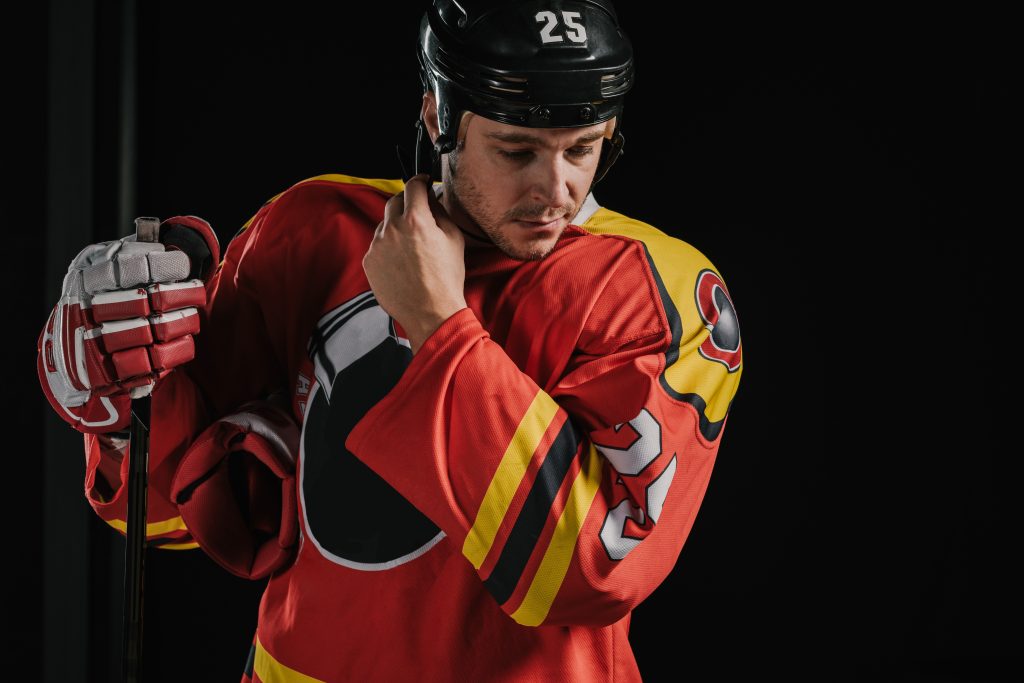
An NHL hockey jersey with your name and number on it is not the same object as a plain team jersey you grabbed off a rack. The customization changes everything about how it should be handled: how it gets washed, how it dries, how it gets stored, and what happens when something starts to go wrong with the letters or numbers over time.
The good news is that caring for a customized jersey is not complicated. It does require knowing a few things that the tag inside the jersey will not tell you, particularly if your customization involves sewn twill, heat-pressed layers, or a combination of both. Done correctly, the same care routine that protects the fabric also protects the customization for years of wearing, washing, and game-day use.
This guide covers everything: washing method, drying, odor removal, storage, and what to do if the namebar or numbers start showing wear. Whether your jersey was customized through a licensed kit, a send-in service, or came from the shop already dressed, these instructions apply.
Why Customized Jerseys Need Special Washing Care
A standard jersey wash, tossed in with the rest of the laundry on a warm cycle, is one of the fastest ways to degrade jersey customization. The reason comes down to what the customization is made of and how it is attached to the fabric.
NHL-licensed jersey customization uses tackle twill, a woven fabric material cut to letter and number shapes and applied to the jersey either by sewing, heat pressing, or a combination of the two. The layers are precisely aligned and finished, but they are not impervious to heat, agitation, and harsh detergents. High wash temperatures cause the thermal adhesive in heat-pressed layers to soften and potentially lift at the edges. Aggressive spin cycles and tumbling with other garments create friction that pulls at the edges of letters and numbers and can work the stitching loose over multiple washes.
The tackle twill itself is durable, but the connection between the twill and the jersey fabric is what needs protecting. Treat washing a customized jersey less like washing a shirt and more like washing a garment with an applied surface that you want to remain precisely bonded to the fabric underneath it.
Know Your Customization Type First: Sewn vs. Heat-Pressed
Before washing, it helps to know what type of customization is on your jersey, because the two methods have slightly different vulnerabilities.
Sewn customization means the tackle twill letters and numbers are stitched directly onto the jersey fabric using a zigzag or overlock stitch around the perimeter of each layer. This is the traditional, pro-style application. Sewn customization is more durable over time and handles washing better because the physical stitching holds each layer in place regardless of temperature. If you run your finger along the edge of a letter or number and feel raised stitching, your customization is sewn.
Heat-pressed customization means the layers are bonded to the jersey using thermal adhesive that activates under heat and pressure. The adhesive creates a firm bond under normal conditions, but it is sensitive to sustained heat above what the fabric tag recommends. You can tell heat-pressed customization from sewn by the smooth, flat edge of each letter or number with no visible stitching line around the perimeter.
Many jerseys combine both: the nameplate is sewn, the numbers are heat-pressed, or the layers within a number are heat-pressed but the final assembly is sewn down. If you are unsure, treat your jersey as heat-pressed for washing purposes, since the cooler, gentler protocol that protects heat-pressed adhesive will not hurt sewn twill.
Also Read: Sewn vs. Heat-Pressed Jersey Numbers
Step-by-Step: How to Wash Your Customized NHL Jersey
Follow these steps each time you wash your jersey to protect both the fabric and the customization.
Turn the jersey inside out before it goes anywhere near water. Washing inside out keeps the customization away from the agitator, the drum walls, and direct friction contact with other items in the machine. This single step reduces wear on letters and numbers more than any other precaution.
Use a mesh laundry bag if you have one. Placing the inside-out jersey in a mesh bag adds a second layer of protection against abrasion, particularly during the spin cycle. It also prevents the jersey from tangling with other garments.
Set the machine to cold water, delicate or gentle cycle. Cold water is non-negotiable for customized jerseys. Warm water, and especially hot water, softens thermal adhesive in heat-pressed customization and can cause the edges of letters and numbers to begin lifting after repeated exposures. The delicate cycle uses slower agitation and a gentler spin, both of which reduce mechanical stress on the stitching and bonding.
Use a small amount of mild liquid detergent. Powder detergents can leave residue in the weave of the mesh fabric and around the edges of tackle twill. Liquid detergent in a quantity appropriate for a single delicate item (roughly half the standard dose) is sufficient. Avoid detergents with bleach, optical brighteners, or fabric softeners. Bleach will damage the color of the twill. Optical brighteners can subtly alter the appearance of colored fabric over time. Fabric softener leaves a coating on the mesh fabric that reduces breathability and, over repeated use, can affect the bond between the twill layers and the jersey.
Wash the jersey alone or only with similarly colored delicate items. Do not wash your white away jersey with dark items, and do not mix a jersey with jeans, towels, or anything with hardware like zippers. Abrasive fabrics and metal hardware cause surface damage to both the jersey mesh and the customization.
Skip the pre-soak unless dealing with a specific stain. Pre-soaking with stain treatment products is fine for the jersey body, but keep any enzymatic or bleach-based stain remover away from the twill customization. Apply stain remover only to the mesh fabric areas and rinse thoroughly before washing.
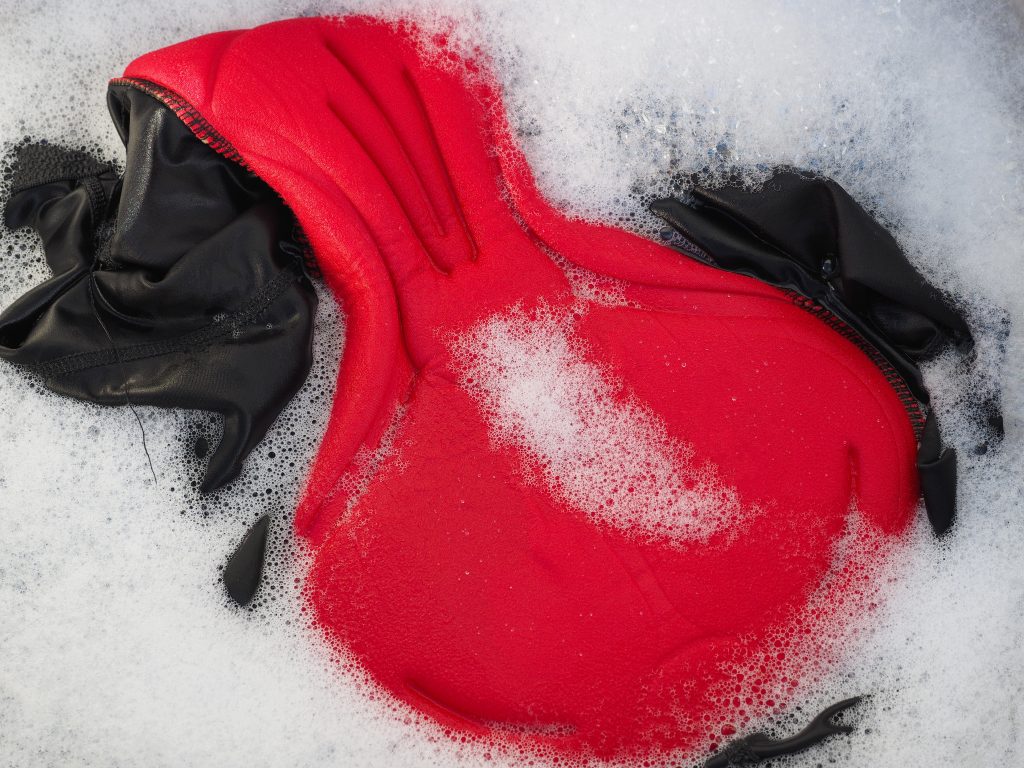
Drying Your Jersey: The Most Important Step Most People Get Wrong
The dryer is the single biggest enemy of customized jersey longevity. Heat and tumbling together are exactly the conditions most likely to soften adhesive, pull at stitching, and cause the edges of letters and numbers to begin separating from the jersey fabric. Even a low-heat dryer setting introduces risk that air drying eliminates entirely.
Air dry your customized jersey every single time. Remove it from the washing machine promptly after the cycle ends, and hang it on a wide plastic or padded hanger. A thin wire hanger will stretch the shoulder area of the jersey over time; use something with enough width to support the shoulder panels without deforming them.
Hang the jersey in a well-ventilated space away from direct sunlight. Extended UV exposure fades both the jersey fabric and the tackle twill, particularly on colored letters and numbers. A laundry room, bathroom, or shaded indoor area with air circulation is ideal. Most jerseys dried in this way are fully dry within six to twelve hours depending on humidity.
Do not lay the jersey flat on a surface to dry. Flat drying traps moisture underneath the jersey and significantly slows drying, which allows mildew to begin developing in the fabric. Hanging allows air to circulate on both sides simultaneously.
If you need the jersey dried faster, a fan directed at the hanging jersey accelerates drying without introducing heat. This is the best alternative when time is a constraint.
What to Do If Your Jersey Smells After Washing
Game-worn jerseys, jerseys used during physical activity, and jerseys stored for extended periods without wearing can develop persistent odor that a standard cold wash does not fully eliminate. This is typically caused by bacteria embedded in the mesh fabric rather than surface-level soil.
The solution is a pre-soak before washing. Fill a clean sink or basin with cold water and add a quarter cup of white distilled vinegar. Submerge the jersey (inside out) and allow it to soak for thirty minutes. Vinegar is a mild acid that neutralizes the alkaline compounds left by sweat and effectively kills odor-causing bacteria without damaging the fabric or the twill customization. After soaking, wring gently without twisting and wash as normal using the cold, delicate cycle.
Baking soda is an alternative to vinegar for odor removal. Add a quarter cup to the wash drum along with the detergent. It will not harm the customization and works as a deodorizing booster for the detergent.
For jerseys with very persistent odor after multiple washes, the cause is often inadequate drying rather than inadequate washing. A jersey that is dried while still damp or stored before it is completely dry develops mildew in the mesh fabric that smells musty and resurfaces with heat or humidity. Ensure the jersey is completely dry before wearing or storing it, and repeat the vinegar soak if mildew smell has already developed.
Do not use fabric sprays or deodorizing products directly on the tackle twill customization. These products are designed for fabric and can cause spotting or leave a residue on the surface of the letters and numbers.
How to Store Your NHL Jersey to Keep the Customization Looking New
How a customized jersey is stored between wears has a direct effect on how the customization holds up over years of ownership. Improper storage causes creasing of the tackle twill, compression damage to raised stitching, and color transfer from adjacent items.
Hang your jersey on a wide hanger in a closet with enough space that it does not sit pressed against other garments. A jersey folded in a drawer and left under other items for weeks at a time develops permanent crease lines in the tackle twill, which are difficult to remove and affect the appearance of the letters and numbers. Hanging keeps the customization in its natural flat state without pressure points.
If you must fold the jersey for travel or storage in a bag, fold it with the customization facing inward so that the letters and numbers are protected on the inside of the fold. Do not fold it with the numbers pressed face-to-face, as this can cause the surface layers of adjacent tackle twill to stick together and separate the finish when unfolded.
Keep the jersey away from direct sunlight in storage. A closet shelf or drawer, while not ideal for preventing creasing, protects against UV fading. Displaying a jersey on the wall in a frame, which many fans do with game-worn or collector jerseys, requires UV-protective glazing on the frame to prevent gradual bleaching of the fabric and tackle twill over years of display.
Do not store a jersey while it is even slightly damp. Moisture trapped inside a folded or hanging jersey in a closed space promotes mildew growth, which is difficult to eliminate once established in the mesh fabric. Always confirm the jersey is fully dry before it goes into storage.
What to Do If Your Namebar or Numbers Start to Peel
Edge lifting on letters, numbers, or the namebar is the most common form of customization wear, and its severity determines whether it is a fixable problem or a reason to have the kit professionally replaced.
Minor lifting at the corner or edge of a letter, where the edge of the twill has begun to separate from the jersey fabric by a few millimetres, can often be reattached at home using a heat-transfer pressing cloth and a household iron. Set the iron to its lowest heat setting, place a thin pressing cloth over the affected area to prevent direct iron contact with the twill, and apply firm gentle pressure for ten to fifteen seconds. Allow to cool completely before handling. This re-activates residual thermal adhesive and can reseat a small separation. Do not apply the iron directly to the tackle twill surface or to the stitching of a sewn kit, as direct iron heat will damage both.
For lifting that extends along a significant portion of an edge, or for letters and numbers that are fully detached or tearing at the seams, home repair is likely to produce inconsistent results. The better option is to have the customization professionally removed and replaced with a new licensed kit. This is exactly the service that jersey customization specialists offer, and a professionally applied new kit will look factory-fresh and last significantly longer than a repeatedly re-adhered one.
Peeling that affects only heat-pressed layers while the sewn layers remain intact is a sign that the original application was heat-pressed without the follow-up sewing step. Sewn finishing around the perimeter of heat-pressed layers dramatically extends the life of the bond and prevents the edge-lifting that occurs with heat-press-only applications over time. When having a kit replaced, specifying a sewn finish is the better long-term investment.
FAQ
Can I machine wash my NHL jersey?
Yes, but only on a cold water, delicate or gentle cycle with the jersey turned inside out. Never use warm or hot water, and always air dry rather than using a dryer.
Can I dry my jersey in a dryer on the air-only setting?
An air-only (no-heat) tumble cycle is less risky than a heated cycle, but the mechanical tumbling still creates friction on the customization. Hanging to air dry is always the safest option.
How often should I wash my jersey?
Wash it after each wearing if worn during physical activity, or when visibly soiled or odorous. For display or occasional wear, washing once or twice per season is sufficient.
Is it safe to iron a hockey jersey to remove wrinkles?
Only on the mesh fabric body at a very low setting, never directly on the tackle twill customization. For creases in the letters or numbers, use a pressing cloth and the lowest iron setting with very brief contact time.
What detergent should I use?
A mild liquid detergent without bleach, optical brighteners, or fabric softener. Sport-specific detergents formulated for synthetic fabrics are a good choice for jerseys that see actual game use.
Can I have peeling customization repaired?
Minor edge lifting can sometimes be re-pressed at home with a low-heat iron and pressing cloth. Significant peeling or detached letters should be addressed by a jersey customization specialist who can remove the old kit and apply a new licensed one.
Does the type of customization (sewn vs. heat-pressed) affect washing instructions?
The cold, gentle, inside-out, air-dry protocol is correct for both types. Heat-pressed customization is more sensitive to temperature than sewn, so the low-temperature protocol is especially important if any of the customization was applied without a sewn finish.
How do I know if my jersey customization is NHL licensed?
NHL-licensed customization uses officially approved materials, fonts, and colour specifications for each team’s kit. If your jersey was customized through an NHL-licensed provider, the customization will match the on-ice specifications exactly. Unlicensed customization often uses different materials or font proportions that do not match team standards.
Conclusion
A well-cared-for customized NHL jersey can last years without the letters fading, the numbers peeling, or the namebar lifting at the edges. The care routine is not demanding: cold water, gentle cycle, inside out, air dry. Getting those four things right on every wash eliminates the vast majority of the risks that cause customization to deteriorate prematurely.
The more nuanced steps, understanding whether your kit is sewn or heat-pressed, knowing how to address early-stage edge lifting, using vinegar for persistent odor, and hanging rather than folding for storage, are the difference between a jersey that looks good at ten wears and one that still looks good at a hundred.
When the customization does eventually show significant wear, having it professionally replaced by an NHL-licensed specialist is the correct path forward. A new, properly applied kit on a jersey in otherwise good condition restores the look completely and, with proper care, will last as long as the original.